
About Your Psychologist
Welcome! I’m Dr. Devina Daya, a Clinical Psychologist passionate about helping clients navigate anxiety, overthinking, low mood, and relationship stress. My approach blends evidence-based strategies with flexible, reflective therapy to help clients build confidence, improve communication, deepen self-understanding, and create lasting change.
I hold a Ph.D. in Clinical and Counselling Psychology from the University of Toronto and completed my pre-doctoral residency with the Nova Scotia Health Authority in the Adult Mental Health and Addictions Program. With over a decade of academic and clinical training, my experience spans community mental health, private practice, and hospital settings, including both outpatient and residential treatment programs.
In addition to individual psychotherapy, I provide psychodiagnostic assessments, including diagnostic clarification, as well as supervision and consultation to student trainees and peers. My goal is to provide clients with practical tools, effective strategies, and supportive guidance to overcome obstacles and grow into stronger, more confident versions of themselves.
I am registered with the College of Psychologists and Behaviour Analysts of Ontario (CPBAO) and am a member of the Canadian Psychological Association (CPA) and the Ontario Psychological Association (OPA).

What is Cognitive, Behavioural and Attachment Focused Therapy
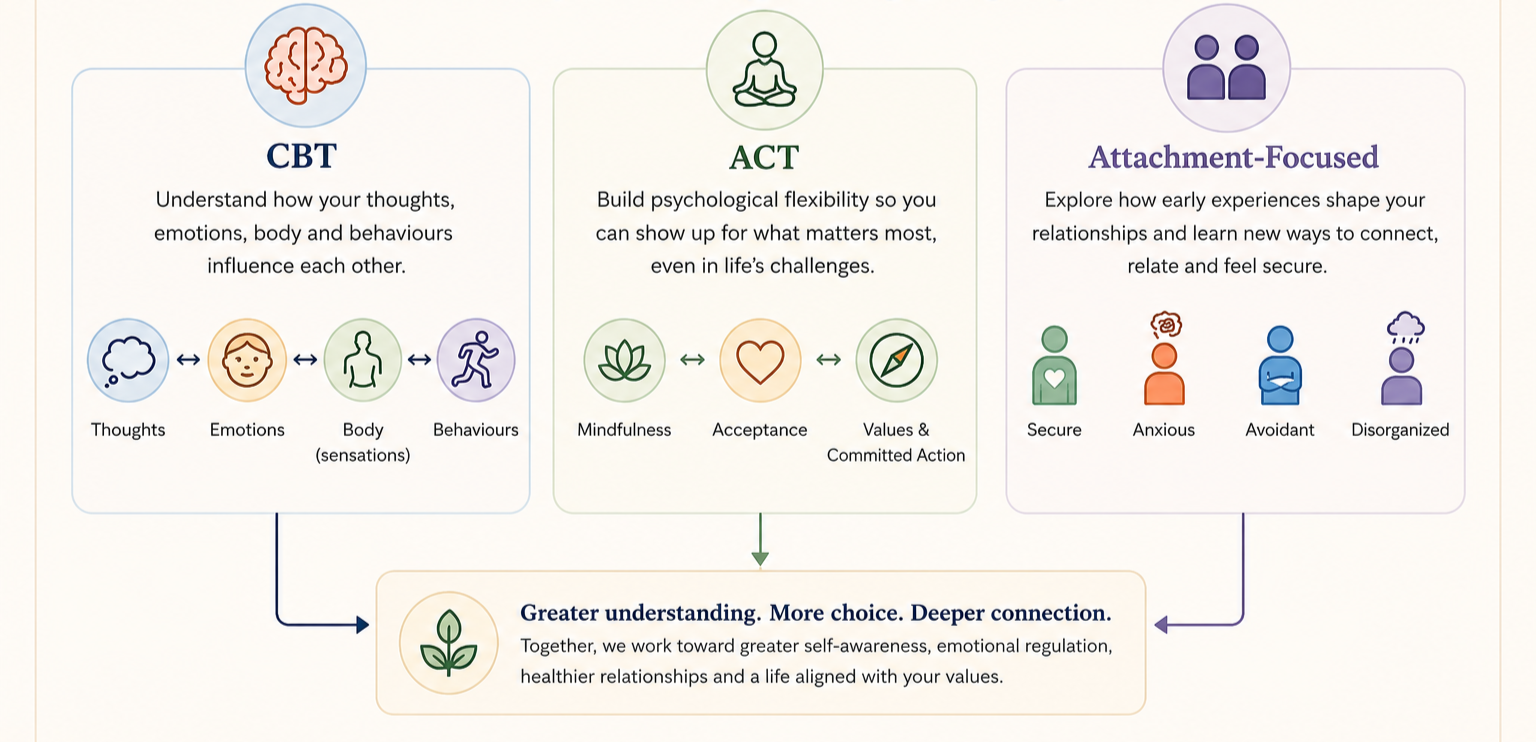
Cognitive Behavioural Therapy (CBT) and other third-wave therapies (i.e. Acceptance and Commitment Therapy (ACT)) focus on the relationship between thoughts, emotions, and behaviours. The aim is to identify thinking patterns (cognitions) and unhelpful behaviours that contribute to emotional distress. By developing greater awareness, you develop greater agency over your behaviours, and greater commitment to your values and life goals. By developing a toolkit anchored in these approaches you can learn to regulate difficult emotions, understand and evaluate core beliefs and engage in your values.
Attachment-Focused Therapy including Interpersonal Psychotherapy (IPT) focuses on different aspects of your psychological health primarily your relational stressors. Attachment therapy focuses on understanding how early attachment experiences affect current relationships. This approach is particularly helpful in navigating romantic partnerships, strengthening your communication patterns and developing greater ability to regulate emotions. IPT can also be particularly helpful in navigating life change and transition, grief and loss and interpersonal conflict. Through this form of therapy you can learn to respond more effectively in your relationships and improve your ability to navigate modern-day relationships.